
So Daniel, I bet you didn’t have to wait to be ordained to first hear someone in the church refer to the 80/20 rule: 20% of the people do 80% of the work.
We are human, here, in the church. Have I mentioned that?
Years ago I worked in a church in Fairfield County, CT. It wasn’t too unlike St. James - professionals in the NYC area. Very active vestry, lots of programs, big campus. Lots to do. It came up frequently there, the 80/20 rule. At the time, I thought, Well, that’s just these people. But it’s not. It’s come up in every church I’ve served since, of all different populations and demographics.
It’s true that many churches don’t do a good job of helping people get involved. We often fail to express the need for more help, grudgingly carrying out our duties while all these people in the pews don’t give a thought to how everything gets done. We need to do a better job of asking for help. Of making a need known. There’s that.
It’s also true, though, that in a group of people, there will always be an imbalance like this for all sorts of good reasons having to do with people’s lives, their personalities, the age of the kids, their means, resources. I’ve seen the fixation on the 80/20 rule wreck people’s experience of church when I’m not sure it needed to.
That’s not exactly (or only) what today’s parable is about, but it’s what it brought to mind this year on reading it. This Gospel passage falls right as we’re gathering back together as a church community, just as our program year is starting up and faithful volunteers are rearing up to get the Annual Appeal ready, the next capital project going, the youth groups formed and programming planned, the Graveyard and Nursery School boards back in session, coffee hours organized.
This passage also comes amid many other teachings in Matthew’s Gospel on living in community--the struggles, the joys, the many concessions of life, together.
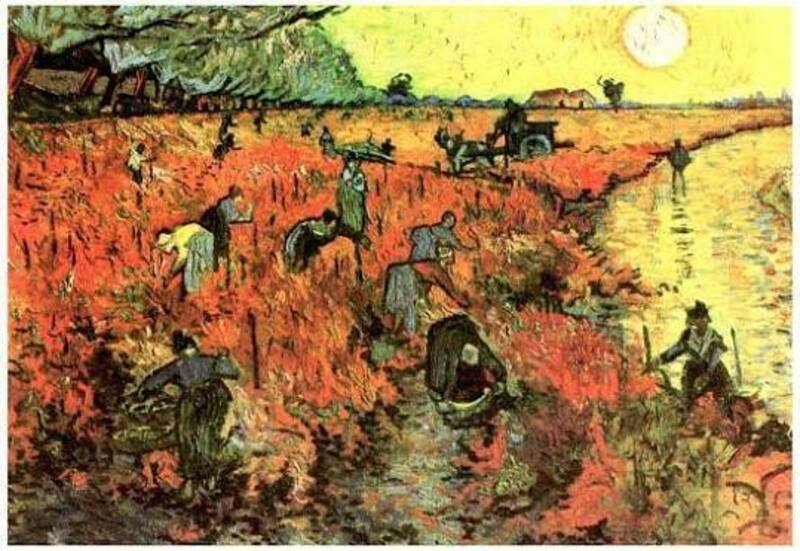
In the parable, Jesus describes a landowner, who goes out early into the marketplace to hire workers to help him harvest his grapes. He hires some workers, they settle on a wage for their work, and they begin. It’s early in the morning.
A few hours later, at nine, the owner goes back to the marketplace and hires another group of workers. They start to work. About three hours after that, at noon, he goes back a third time and hires more, then again a fourth time, and then finally, right before the close of day, he hires the last group.
When it comes time to pay the workers, the landowner starts with the last to be hired, paying them one denarius. He comes to the group that arrived just before them, pays them one denarius, then the noon-day and then the 9 o’clock group. Lastly he comes to the group that arrived first, early in the morning, and pays them, one denarius, a day’s wage. Everyone gets, one denarius.
Understandably, those who worked the longest day are upset. Technically, the owner didn’t do anything wrong. They had agreed on the wage and that’s exactly what he paid. But the outrage, that those first-comers picked almost all of the day’s grapes through the worst heat of the day, where those others just strolled in and filled maybe half a basket and still got their denarius just like everyone else.
When Jesus first shared this parable, it might have been -- seems to have been -- directed at the disciples themselves, who resented the openness of his ministry, and the fact that, even though they had been with him from the very start, working hard, laboring at his side, he showed the same love and generosity of spirit to people he met that very day. That wasn’t right. So he told them a parable.
The Gospel writer Matthew, when he recorded this parable some sixty years later, may have had in mind those Jewish Christians in his (Matthew’s) community who felt that the Gentile newcomers were getting the same treatment that they, there from the very beginning, maybe even there with Jesus himself, were getting.
Alternatively, many have argued that when it comes to Jesus’ teachings about money, we should always consider the fact that Jesus meant, money. Assuming we take the landowner to be a stand-in for God, and--to quote New Testament scholar Amy Jill Levine on this passage: “What God does is often what those who claim to follow God should also do”-- then the lesson here for us -- and this is Levine’s strenuous argument -- is that we should work for a society where resources are spread around and everyone has what they need to live a decent, dignified life. (I’m making it a goal in my preaching this fall to put a book in our new lending library for every sermon preached, and this week’s is the journalist Annie Lowery’s “Give People Money,” a case for a universal basic income—an idea that likely raises people’s hackles in the way that Jesus probably meant it to.)
The parable today is versatile. [Yet] across so many of its applications it shares that common grievance that wherever two or three are gathered together: someone is doing all the work. Or at least someone feels that way.
Life in community. :)
I remember hearing years ago, I think it was from Pema Chodrun, the Buddhist nun and writer, that whenever she encountered an unpleasant person or situation she’d say, Ah, my guru!
How on earth else do we learn that magnanimity of spirit that isn’t over here counting hours put in, or wages or favor earned—how on earth else do we learn that except by being in community and running up against all these unpleasant thoughts, feelings, even people. I’m doing 80% of the work! That lazy person--is your guru.
And we can’t neglect to consider: maybe they’re not lazy at all. Maybe they are lazy! OR, maybe they’re going through a lot. Maybe they’re grateful to you in ways they’ve never expressed, or wish they could do more but for reasons we may never know, and good ones, just can’t right now.
We carry each other’s loads with the best assumptions in our hearts.
This is community. We learn it here. In the end, we akk feast at the table, whatever we’ve been able to provide.
So let’s thank the 20, if they are the 20, who do the work. But let’s thank Christ for showing us a higher, better way, a way of working, and forgiving, together. Amen.